
Meet the ocean’s deep-diving legend—the sperm whale. A creature of mystery, power, and quiet intelligence.
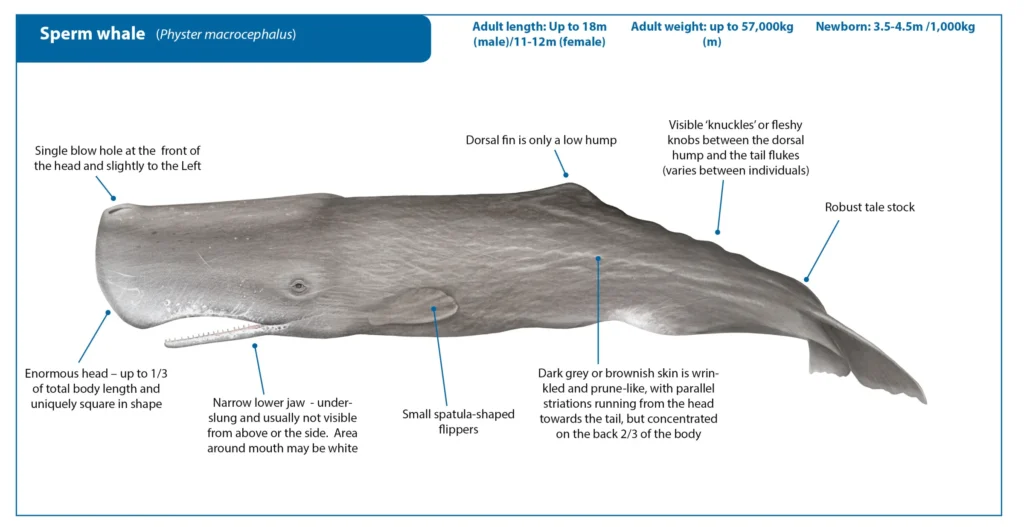
The sperm whale is one of the ocean’s greatest explorers. While most sea creatures stay near the surface this giant prefers the deep blue unknown. They can dive over 2,000 meters and stay there for more than an hour no sunlight no air just the silent world of the deep
That massive head you see isn’t just for show. It’s filled with something called spermaceti oil which helps control buoyancy. In the past people hunted sperm whales for this oil but today thankfully we simply admire them for what they truly are remarkable deep-sea travelers
Communication is another part of their magic. Sperm whales click to talk using unique rhythms called codas. Each family group or pod has its own pattern like a personal accent. Scientists think these clicks might carry social meaning proof that these giants have some of the most advanced communication in the animal kingdom
They live in tight family groups led by females. Males usually roam alone returning from time to time like old sailors checking in. Their main food is giant squid which they hunt far below guided by sonar so precise it makes human technology look simple
Watching a sperm whale surface is an unforgettable moment. One blow of mist a slow arch of the back and then that tail massive and graceful disappearing into the sea again. It’s a glimpse into a world most of us will never see yet it reminds us how much beauty still lives beneath the waves
Local note for Mirissa, Sri Lanka:
Mirissa is one of the best spots in the world for whale‑watching. Among the whales you might see there is a resident sperm whale named Bindu, who is mostly spotted in front of Donra Head. Bindu has become a familiar sight for locals and visitors alike and is a favorite for those looking to catch a glimpse of a true ocean resident.
How to identify sperm whales in the water:
Sperm whales have large square-shaped heads, a single blow that leans slightly forward, and a small dorsal fin near their back. These features help you spot them even from a distance and distinguish them from other whales in Mirissa